Engineering: A Subject Snapshot

UK, US and Australia: what international students and partners need to know.
Engineering is one of the most in-demand fields in international higher education and the data makes clear why. The UK alone employs 6.4 million people in engineering and technology roles, faces a projected shortfall of 1.5 million engineers by 2030 and has around 25% of all job postings in engineering-related fields. Globally, the World Economic Forum's Future of Jobs Report 2025 places Environmental and Renewable Engineers among the fastest-growing roles of the decade.
For agents and recruitment partners, this is a subject area with strong, sustained demand across undergraduate and postgraduate levels, across multiple source markets and across three of the world's most sought-after study destinations. This snapshot covers what you need to know about engineering recruitment in the UK, US and Australia: who is studying, where growth is coming from, which disciplines are rising and what career outcomes students can expect.
Engineering in the UK
Why engineering matters
Engineering is a cornerstone of the UK economy and a critical driver of future growth, innovation and sustainability.
- 6.4 million people are employed in engineering and technology roles in the UK, representing around 19% of the total workforce, nearly 1 in 5 jobs.
- Engineering and technology roles are expected to grow steadily to 2030, particularly to support national priorities such as net-zero emissions.
- Around 25% of all UK job postings are in engineering-related roles, demonstrating strong and sustained employer demand.
- The UK faces a significant skills shortage, with estimates suggesting a shortfall of up to 1.5 million engineers by 2030.
- With a long industrial heritage, the UK remains a global hub for engineering innovation.
Why study engineering in the UK?
Engineering students in the UK benefit from:
- Shorter degree durations with specialization from year one and the option to study an integrated Master's.
- Strong, well-established industry-university partnerships.
- Extensive opportunities for industrial placements, internships and sandwich years.
- Exposure to world-leading research and facilities.
- Strong graduate employability outcomes in the UK and globally.
Who is studying engineering in the UK?
Two out of three students studying engineering are at postgraduate level.
Undergraduate trends
China represents the largest undergraduate source market for engineering in the UK. The strongest growth markets between 2022/23 and 2024/25 have been Saudi Arabia, Qatar and Turkey.
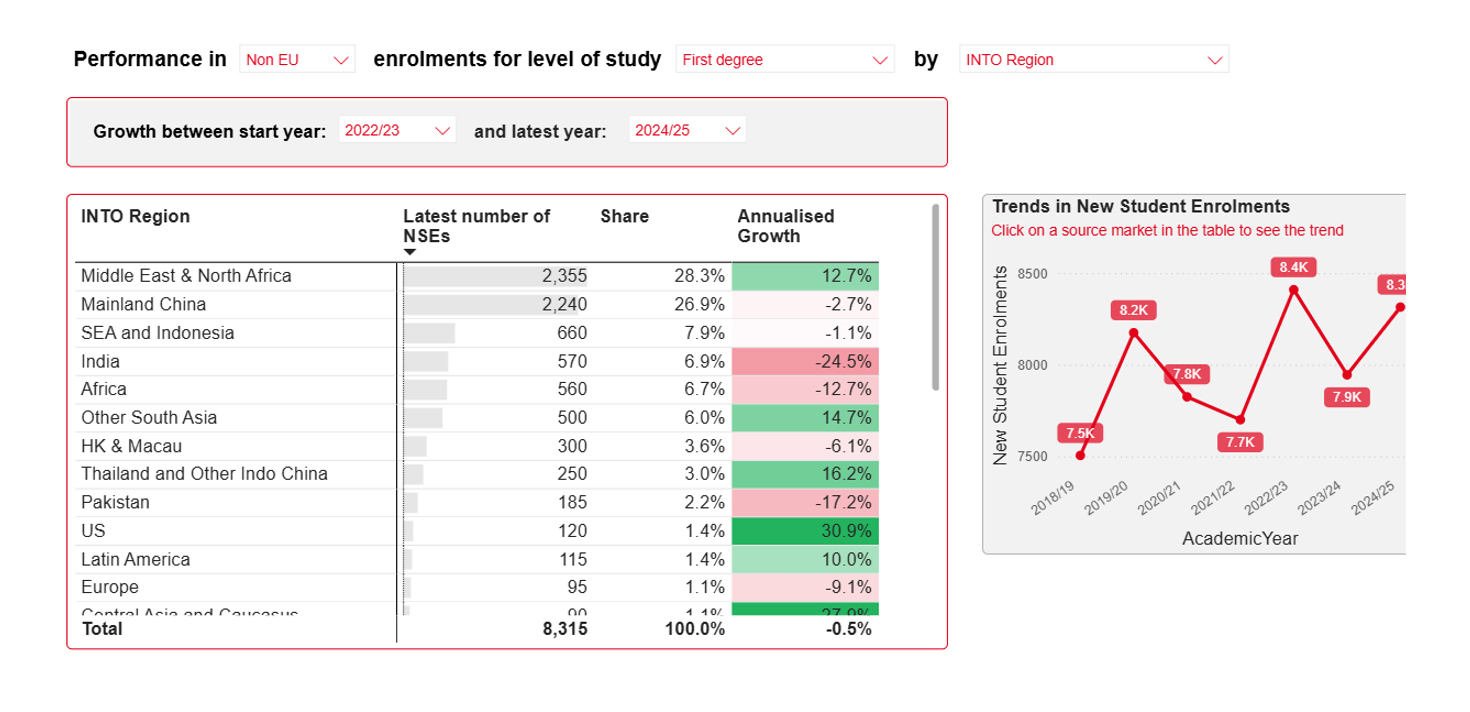
Performance in non-EU undergraduate new student enrolments by source market region (growth 2022/23 to 2024/25).
The majority of undergraduate engineering enrollments from South Asia are at less selective institutions. Middle East and Africa dominates mid-selective institutions.
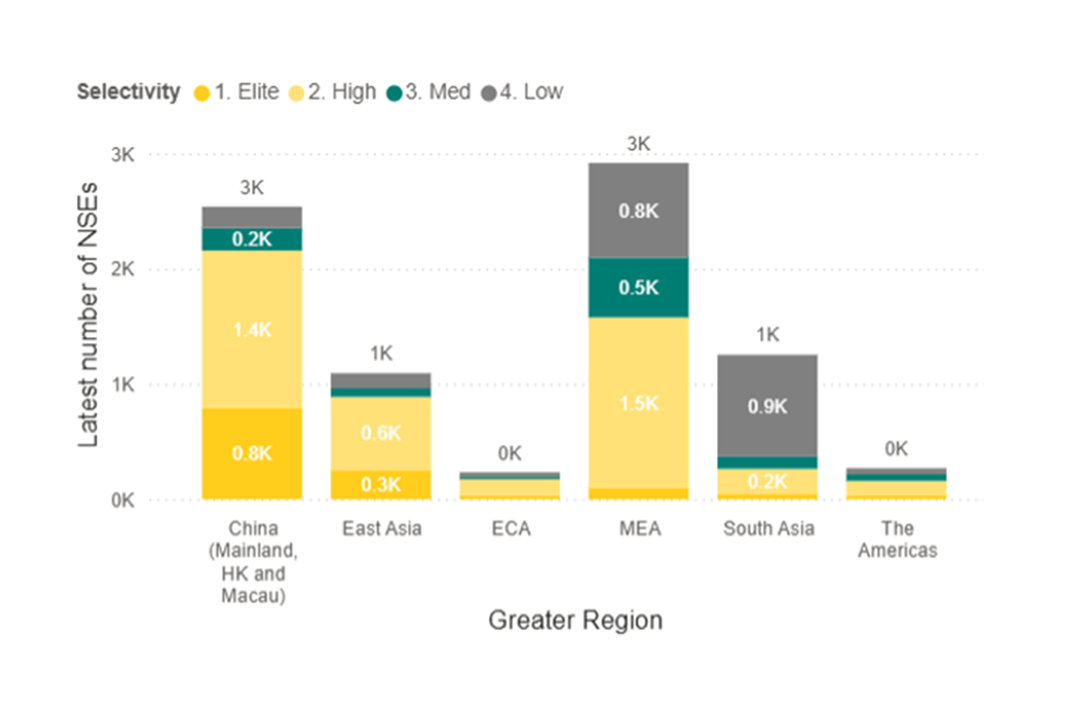
Undergraduate engineering new student enrolments 2024/25 by selectivity of university and greater region.
The latest UCAS data shows continued strong growth in demand for engineering by non-EU students.
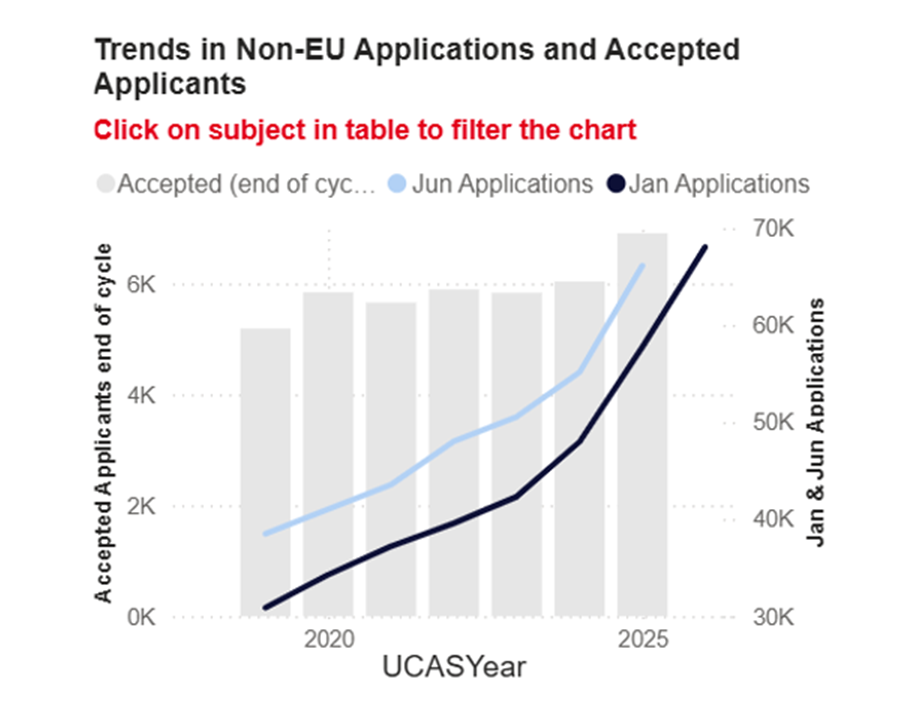
Trends in UCAS non-EU Engineering and Technology applicants (by UCAS deadline) and accepted applicants.
Postgraduate trends
China is the largest postgraduate source market for engineering, followed by India. Overall engineering numbers at Master's level have been declining, though this is not uniform across all markets. India, Pakistan and Nepal are among the largest growth markets.
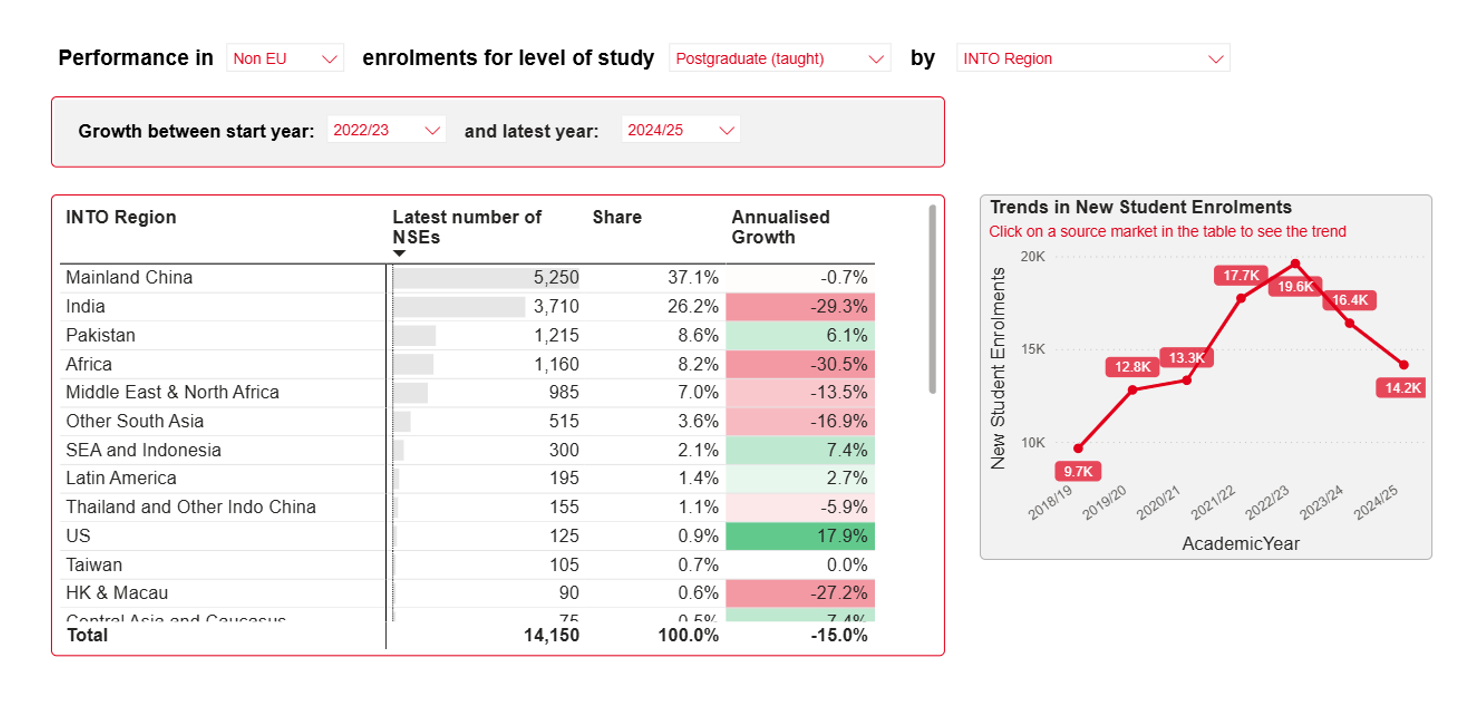
Performance in non-EU Master's new student enrolments by source market region (growth 2022/23 to 2024/25).
The majority of Master's engineering enrollments at mid-selective universities come from South Asia and the Middle East and Africa, whereas Chinese engineering students are focused on highly selective institutions.
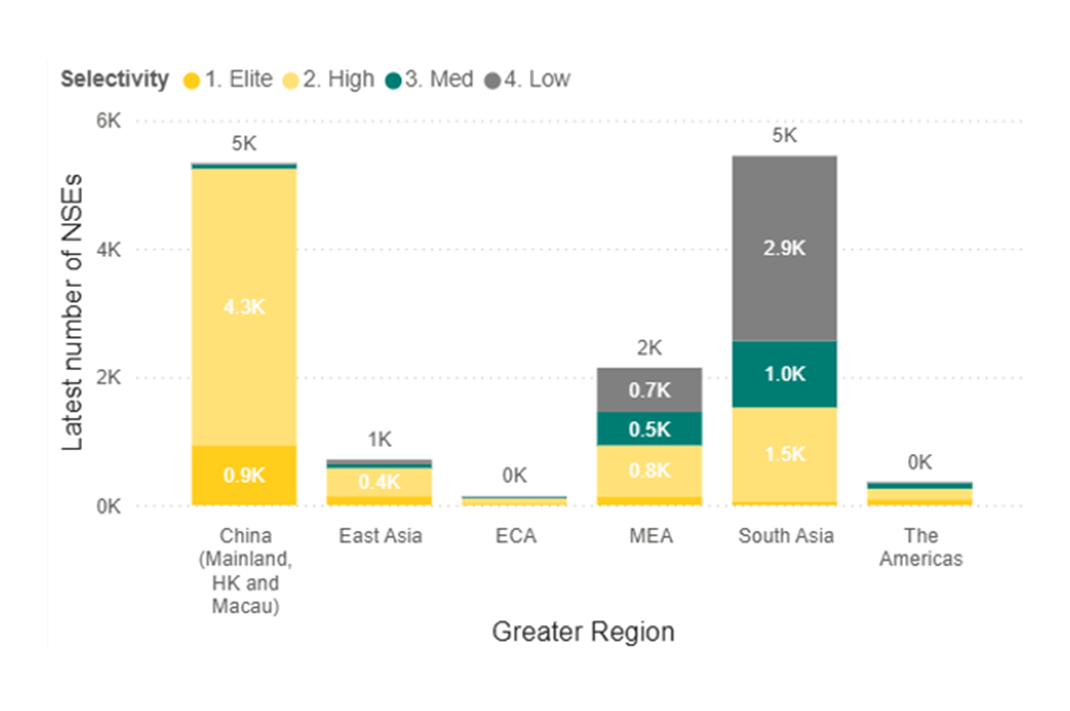
Master's engineering new student enrolments 2024/25 by selectivity of university and greater region.
Subject trends
Undergraduate
Electrical and Electronic Engineering is the most popular undergraduate discipline, followed by Mechanical Engineering. Growth areas include Aeronautical and Aerospace Engineering and Bioengineering, Medical and Biomedical Engineering.
Growth figures cover 2022/23 to 2024/25. By source market, China has seen strong undergraduate growth in Bioengineering. ECA has grown in production and manufacturing engineering. MEA has grown in Aeronautical Engineering. For South Asia, recent growth was only in Chemical and Process Engineering.
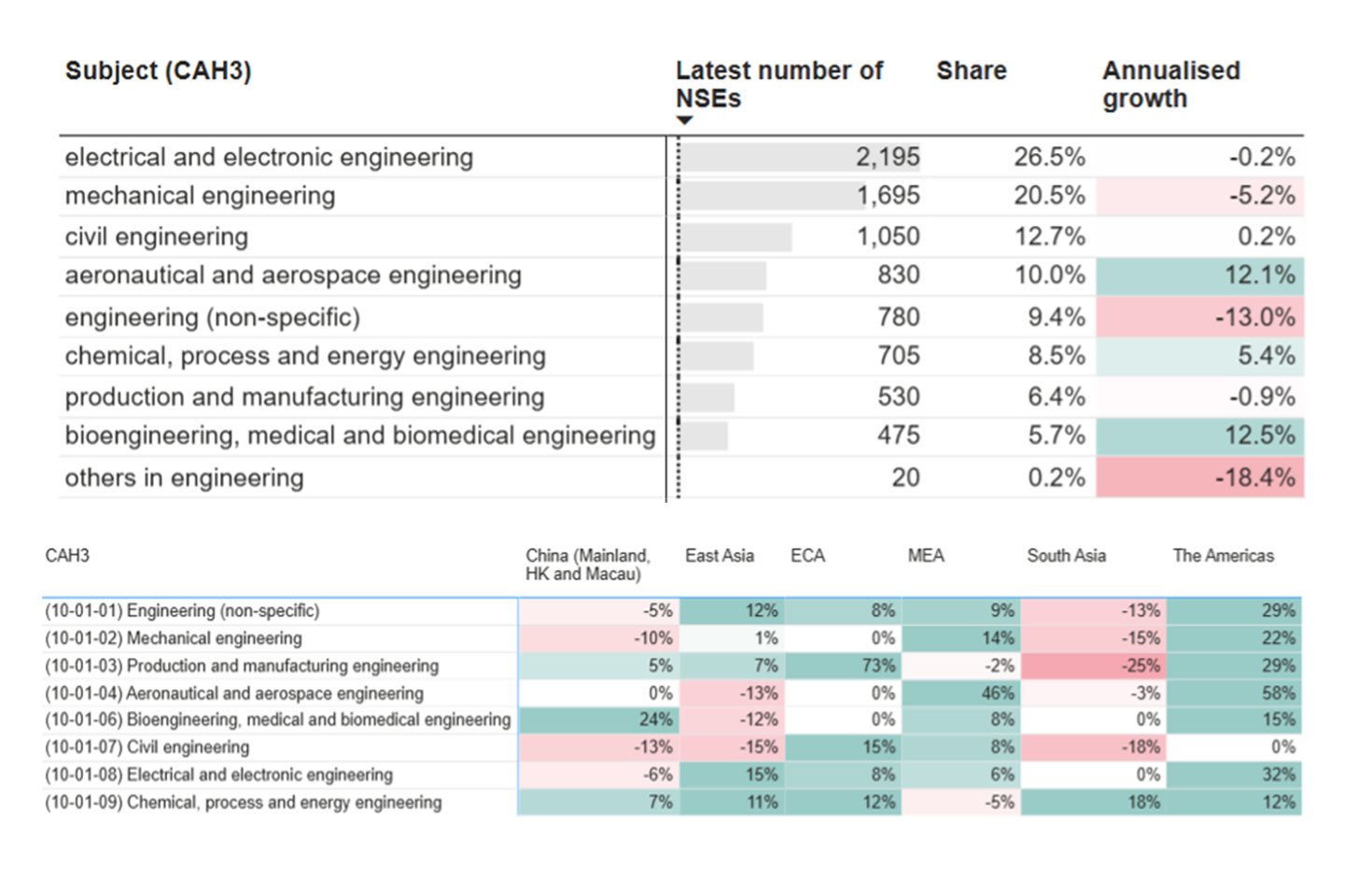
Annualised growth in undergraduate new student enrolments between 2022/23 and 2024/25 by engineering discipline and source market region (with more than 50 new student enrolments, excludes low-selective universities).
Postgraduate
Postgraduate engineering has experienced a decline in numbers in recent years. Electrical and Electronic Engineering attracts the largest number of students.
Although overall Master's new student enrolments in engineering have declined, there are pockets of growth. Bioengineering at Master's level has grown from China and East Asia. China's Master's enrolments have also grown in Mechanical Engineering.
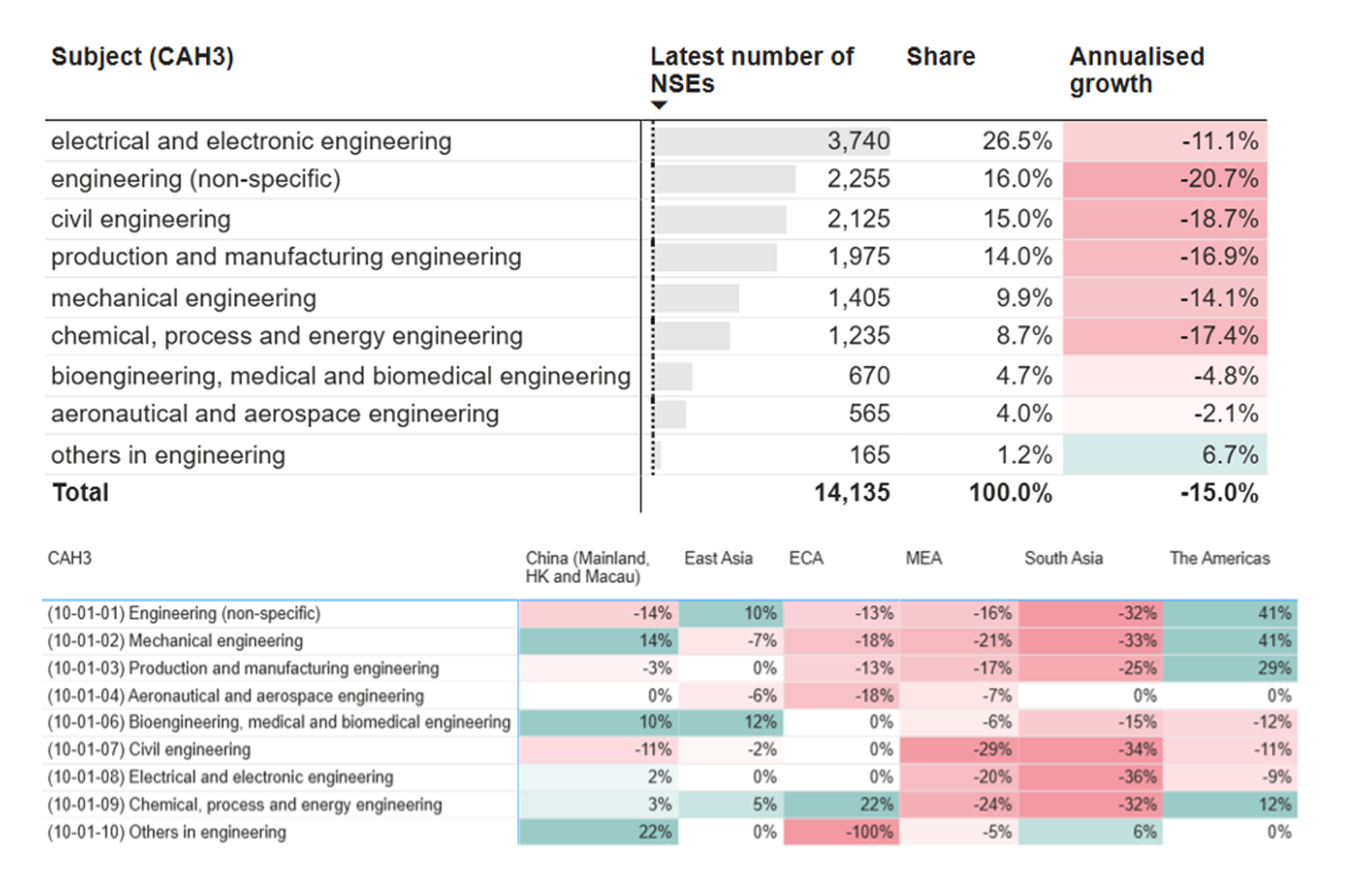
Annualised growth in Master's new student enrolments between 2022/23 and 2024/25 by engineering discipline and source market region (with more than 50 new student enrolments, excludes low-selective universities).
Graduate salaries
Based on HESA Higher Education Graduate Outcomes Salary data (2022/23), estimated graduate salaries for Engineering and Technology are:
- High skilled: £31,975
- Medium skilled: £27,913
- Low skilled: £24,980
- Average: £31,975
Note: The Average and High Skilled figures are identical in the source data. Please verify against the HESA source before publishing.
Global career opportunities
UK engineering degrees are accredited by the Engineering Council and the Institution of Engineering and Technology. They are also recognized under the Washington Accord, which includes India, China, the US, Canada and Australia. This supports global mobility and long-term international careers.
Engineering graduates from the UK are well positioned for opportunities worldwide. Key destination markets include the US, Germany, Canada, Australia, Singapore, Switzerland and the Middle East.
Future engineering demand
According to the World Economic Forum's Future of Jobs Report 2025, Environmental Engineers and Renewable Engineers are in the top 15 growing jobs to 2030.
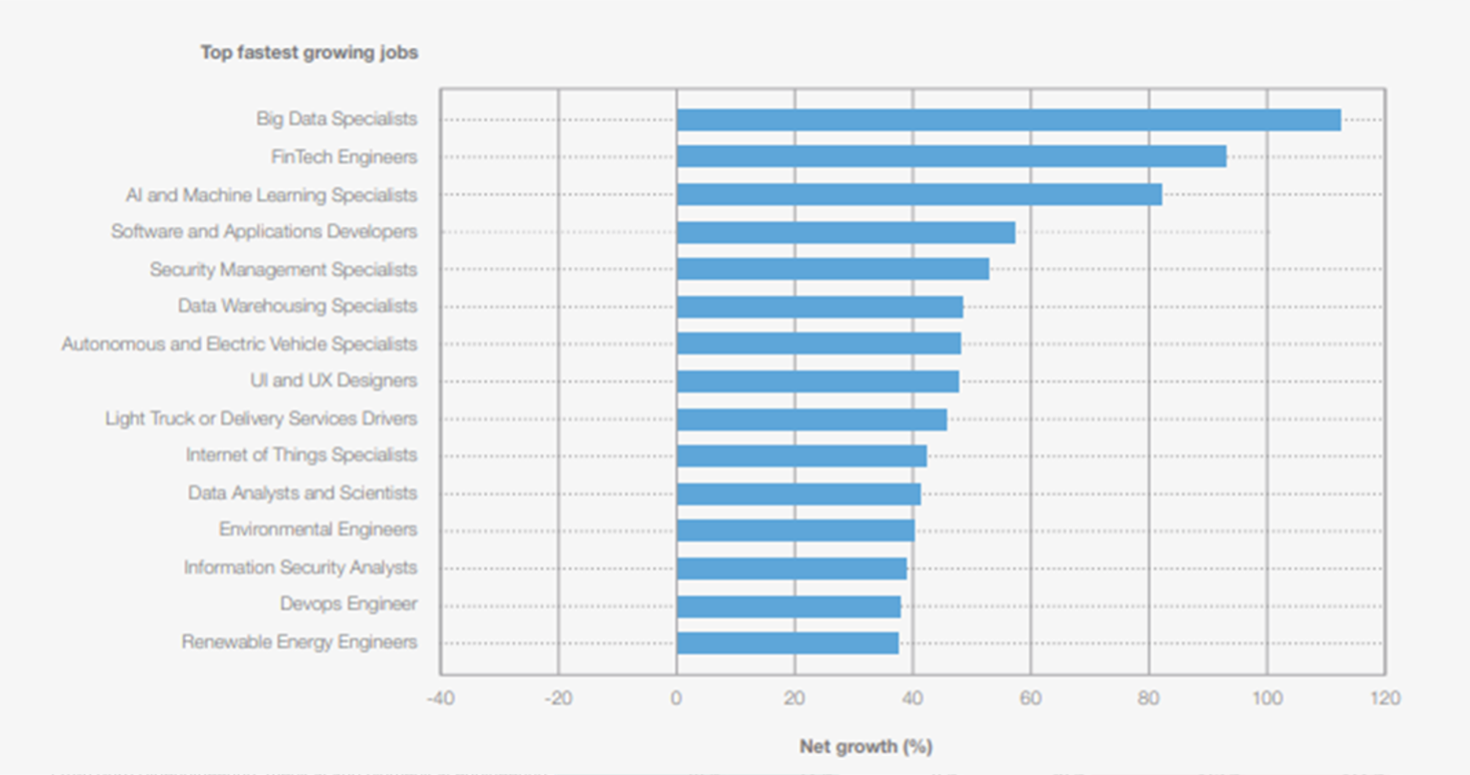
A number of macro and technology trends are predicted to increase demand for engineering roles over the longer term:
- Reducing carbon emissions, creating roles for renewable and environmental engineers.
- Energy distribution and storage, requiring engineers across different energy types.
- Robots and autonomous systems, driving demand for robotic and electrical engineers.
- New materials, nanotechnology and quantum devices, creating roles for semiconductor, chemical and process engineers.
- Ageing populations, increasing demand for bio and medical engineers.
The impact of these trends will vary by source market. Ageing populations are most likely to drive transformation in China and Eastern Asia. Reducing carbon emissions is expected to have the biggest impact in South East Asia.
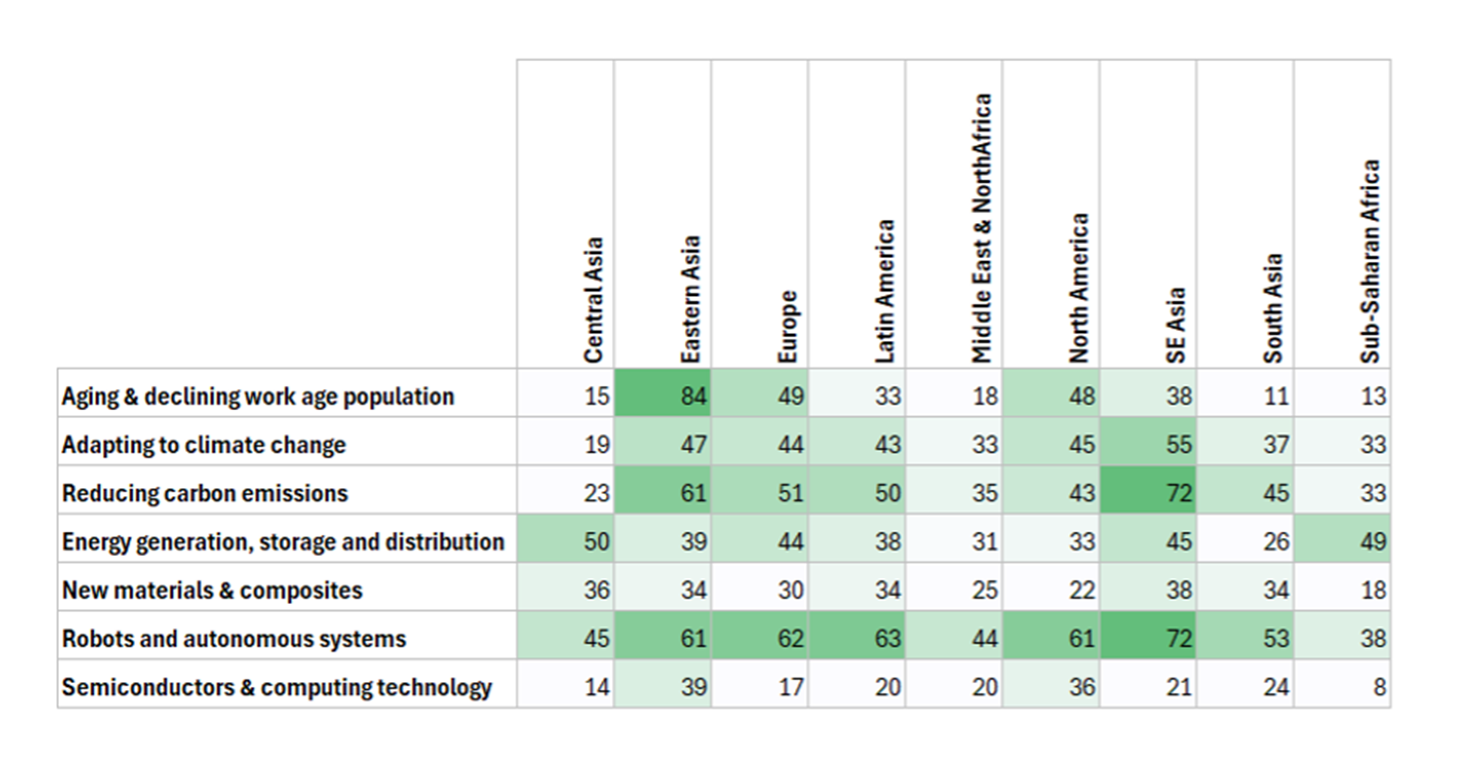 Share of employers which expect trends to drive transformation in their organisation (%), by region.
Engineering in the US
Strong job opportunities after graduation
The US has one of the world's largest and most diverse engineering job markets, with high demand across sectors including technology, healthcare, energy, aerospace, manufacturing, infrastructure and finance.
According to the US Bureau of Labor Statistics, engineering jobs are projected to grow steadily through the next decade, with some fields growing at roughly double the average rate.
Popular high-demand fields include:
- Software and Computer Engineering
- Electrical and Electronics Engineering
- Data, AI and Machine Learning
- Biomedical Engineering
- Civil and Environmental Engineering
Competitive salaries and financial growth
Engineering salaries in the US are among the highest globally. Entry-level engineers often earn significantly more than non-STEM graduates and salaries increase rapidly with experience, specialization or leadership roles. Tech-focused regions such as Silicon Valley, Seattle, Austin and Boston offer especially high compensation.
An innovation-driven economy
The US invests heavily in innovation and R&D. It is home to leading global companies, startups and research labs, with strong funding across AI and automation, clean energy and sustainability, biotechnology and healthcare technology, and space and defence. Engineering students often work on real-world, cutting-edge projects before they graduate.
Work opportunities for international students
While competitive, the US offers structured pathways for international engineering graduates. Optional Practical Training (OPT) allows graduates to work after graduation, and the STEM OPT extension enables longer work periods for eligible graduates.
Engineering in Australia
Strong job demand and skills shortages
Australia has persistent shortages of engineers across multiple disciplines. Engineering roles are consistently listed on Australia's skills shortage lists, particularly in Civil and Structural Engineering, Electrical and Electronics Engineering, Mechanical Engineering, and Mining, Environmental and Renewable Energy Engineering.
Demand is driven by major infrastructure projects, the renewable energy transition and urban development and population growth.
Professional accreditation is overseen by Engineers Australia, whose standards are internationally recognized.
Looking ahead, the engineering workforce is expected to continue expanding, with estimates suggesting growth from around 220,000 professionals in 2025 to approximately 246,000 by 2030 – an increase of roughly 12–13% over the period (postgraduatefutures.com.au).
Growth is expected across major fields, particularly in areas tied to infrastructure, energy and advanced manufacturing, with civil, mechanical, electrical and mining disciplines all continuing to see strong demand.
Graduate employment outcomes
Engineering graduates in Australia enjoy above-average employment rates and strong starting salaries. They are among the most employable of all university majors, supported by strong industry demand and ongoing skills shortages.
Many degrees include industry placements, capstone projects with real companies and internships linked to employers. Major employment hubs include Sydney, Melbourne, Brisbane and Perth.
High-quality, internationally recognized education
Australian universities are globally respected for engineering education. Degrees are accredited under the Washington Accord, allowing international recognition. Teaching emphasises practical, hands-on learning, team projects, applied problem-solving and industry collaboration. Australian engineering degrees are widely accepted in the UK, Canada, New Zealand, parts of Asia and the Middle East.
Post-study work and migration pathways for international students
Australia offers some of the most transparent pathways from study to work. The Post-Study Work Visa allows graduates to gain professional experience. Engineering occupations are often eligible for Skilled Independent visas and state-nominated migration. Work experience gained in Australia also adds points toward permanent residency, making Australia especially attractive for students planning to settle long-term.