AI in the advisory ecosystem: what agents are telling us

The way prospective students search for information about studying abroad is changing. Our latest Agent Survey gives us a clear view of how that shift is playing out across markets, and what it means for the role agents play in the recruitment journey.
Adoption is already the norm
Seven in ten agents reported using AI tools daily or weekly in their work. Usage is highest in East Asia and China and Hong Kong, and lowest in South Asia, but the trend of travel is consistent across every region we surveyed.
|
|
|
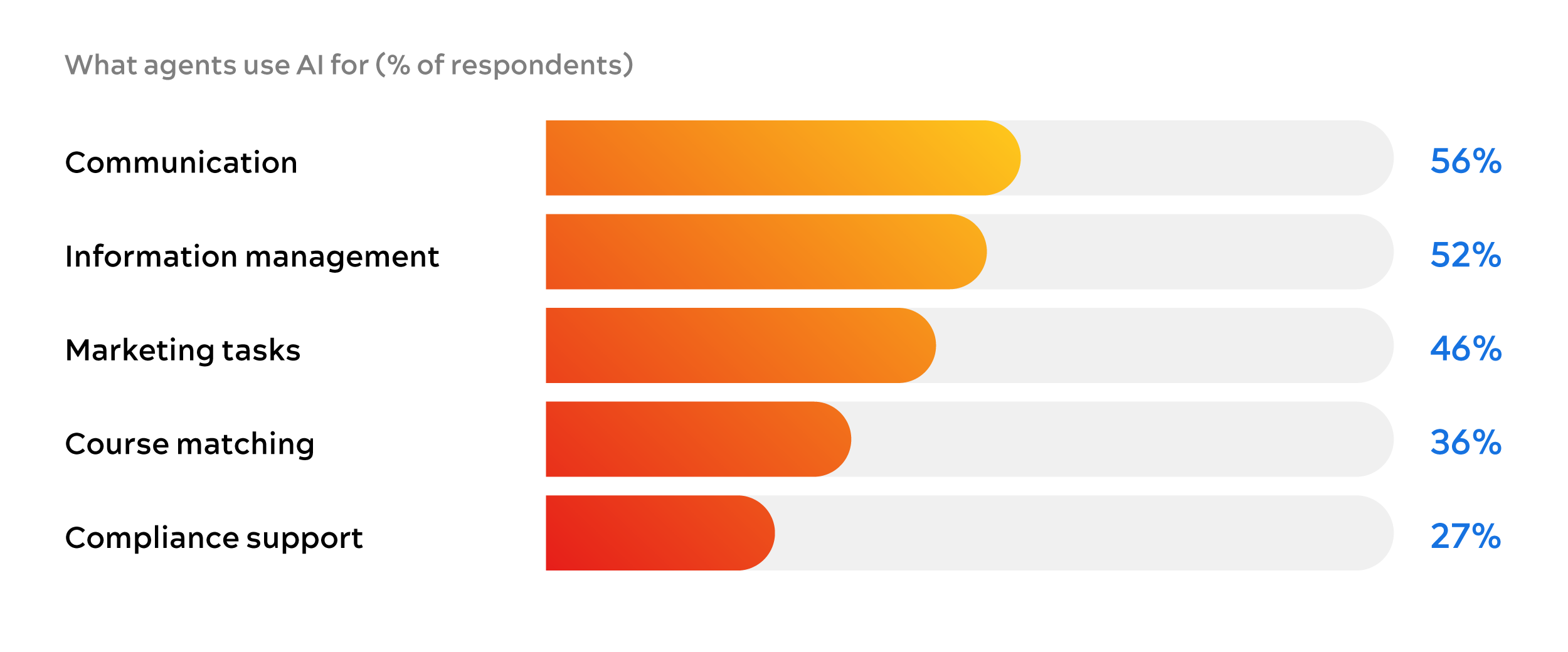
What agents are using AI for matters as much as how often. The pattern reflects a considered approach: agents are applying AI where it adds efficiency, while being more cautious in areas where accuracy and accountability are critical.
Students are arriving better informed
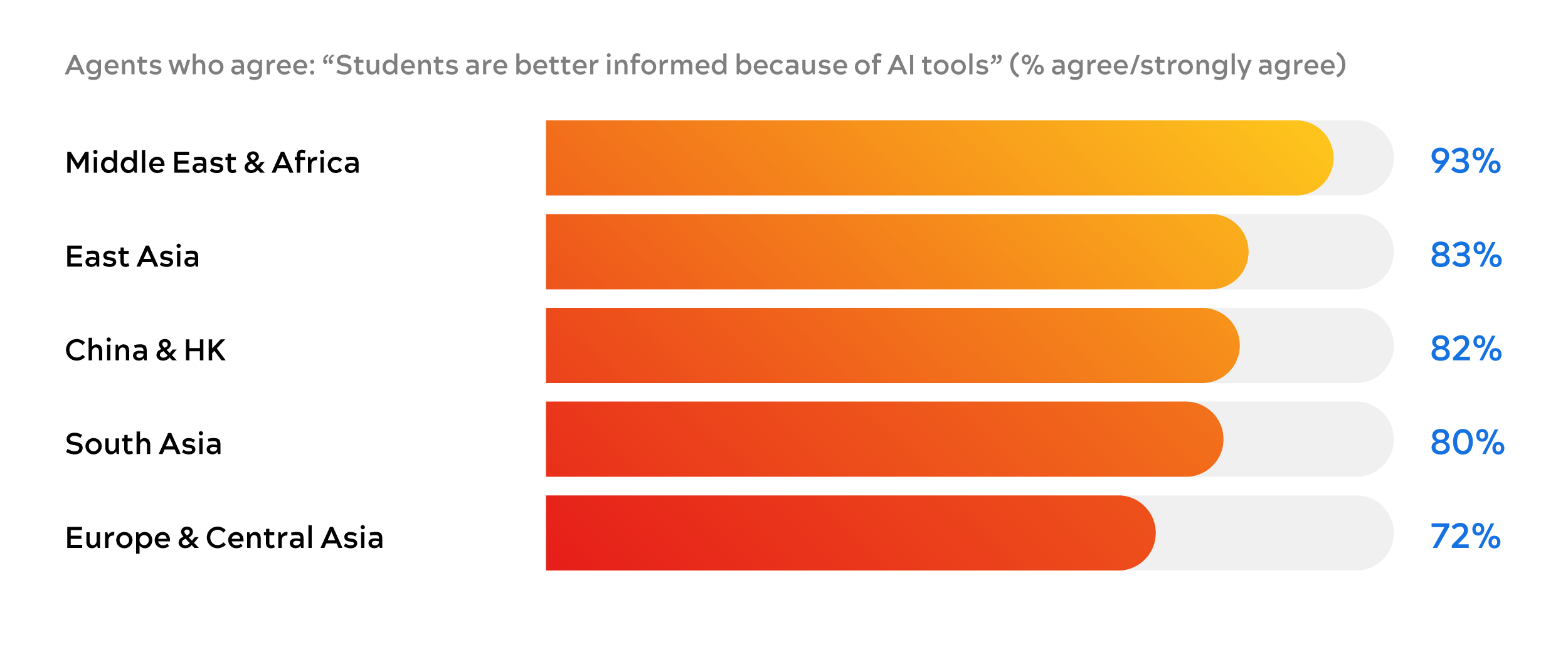
80% of agents felt that students use AI frequently or occasionally when making decisions about where to study. And across every region, the majority agreed that students are better informed as a result.
 This changes the nature of the advisory conversation. Students may arrive having already used AI to research options, compare institutions and form initial preferences. The first impression of a pathway program or university partner may not come from a website or a brochure. That’s a significant shift in where agents need to add value.
A balanced view on risk and opportunity
Agents weren’t uniformly optimistic or cautious. 52% felt AI represents both an opportunity and a threat in equal measure. That reflects an honest assessment of what AI changes and what it doesn’t.
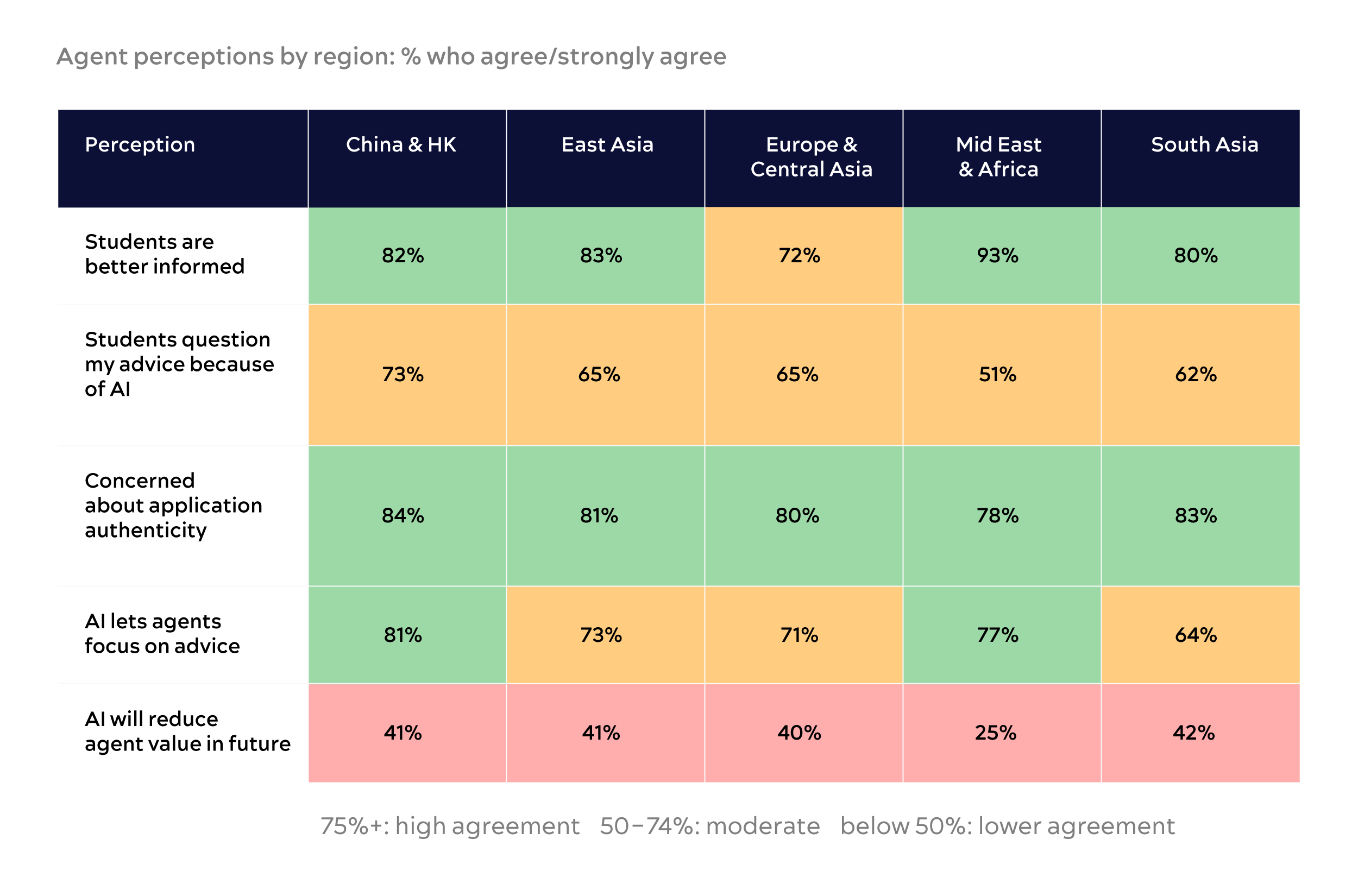
The concern most widely shared across regions was application authenticity. Strong majorities in every market agreed that AI may affect the integrity of student applications. That’s a risk agents are watching closely.
At the same time, most disagreed that AI will reduce the value of education agents in the future. The stronger consensus was that AI allows agents to focus on advice, judgement and student support rather than information gathering.
|
|
“Agents will increasingly be valued not for reciting facts, but for providing emotional context, personalized judgement and reassurance — things AI still cannot do well.” |
What this means for agents
The students coming through your door are more informed than they used to be. That’s broadly a good thing. It means the advisory conversation can move faster, focus on what matters and spend less time on basics.
But it also means the bar for the human part of that conversation is higher. The moments where agents make a genuine difference are the ones AI can’t replicate: reading an individual student’s situation, navigating family expectations, providing reassurance when the process gets complicated. That’s where agent expertise remains essential, and where our survey data suggests agents themselves know their value lies.
The landscape is changing. Our data confirms that agents across every region are already adapting to it.